← All programs

MayBe Less Stress

Stress only when you need it.

Short-term stress that shows up when you need it and passes once it's over helps you act. This program is about the stress that doesn't pass: where it comes from, what it does to your body and behaviour, and what you can do about it.

YouTubevideos at your own pace
up to 12workshops in a small group
1:1individual coaching
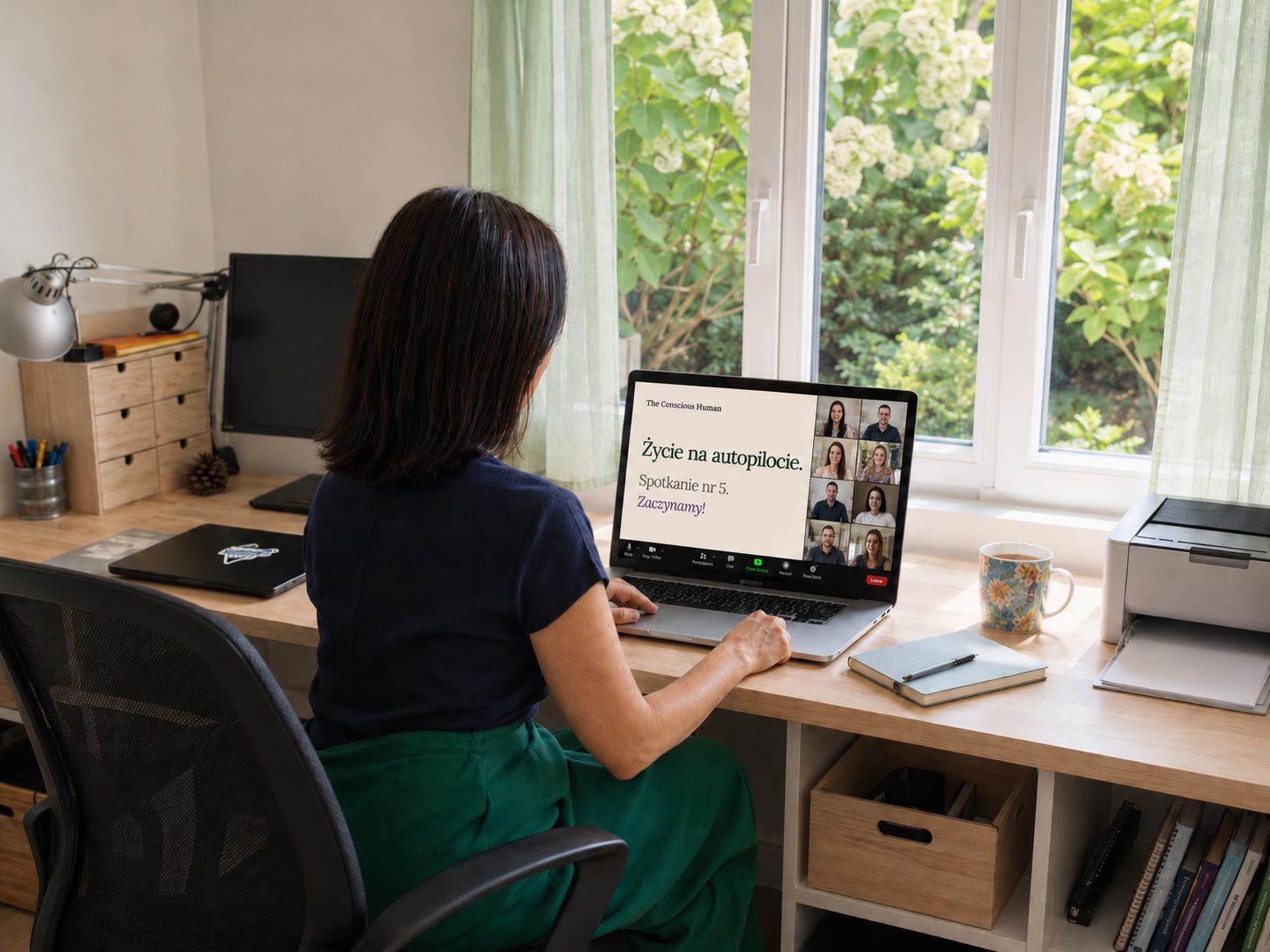
A participant in a MayBe Less Stress session during a video call
Sign up

Choose how you want to start.

Videos you can watch at your own pace, workshops in a small group, or one-on-one work. Start with what fits you right now.

On YouTube

MaybeLessStress channel

Who it's for
For people who first want to understand what's happening to them
Format
A YouTube channel (in Polish)
What you'll find
Videos on the symptoms of chronic stress in the body and in behaviour, on its causes, and on simple steps that help
Watch the channel
Small group

MayBe Less Stress workshops

Who it's for
For people living under constant tension, at university, at work and beyond, who feel like life is happening just out of reach
Format
A cycle of 8 sessions every two weeks, 1.5 hours each, in a group of up to 12
Language
Polish
Dates
You'll find them in the sign-up form
Sign up for the workshops
One-on-one

Individual coaching

Who it's for
For people living with chronic stress who want to look at their situation one-on-one
Format
One-on-one coaching
First step
A consultation session: we get to know each other and see how we can help
Book a consultation
What the research says

Work-related stress
affects one in three people.

29% of workers in the EU say their work causes or worsens stress, depression or anxiety
44% experience severe time pressure or work overload
Source: European Agency for Safety and Health at Work, OSH Pulse 2025 (press release)

Chronic stress usually shows up first in the body and in behaviour. In nights when you can't fall asleep. In digestive problems. In thoughts about work that won't leave you alone in the evening. In outbursts you regret later.

It's easy to treat these symptoms as something separate from work, study or the situation at home. But they usually have a lot to do with them. That's why the program starts by looking at where they come from.

Where stress comes from

Stress rarely has a single source.

It usually sits on three levels at once. Those levels get in each other's way, which is why it's so hard to see on your own where your tension comes from.

You

Your history, what you want, sometimes what you fear, and the way you react to the world around you.

Your role

What you and others expect from the role you play.

Organisation

The system you're part of: a company, a university, but also your family and any group where you have your place and your tasks.

You can't change overnight what's expected of your role or how your organisation works. But you do have influence over how you react to the tension they create in you. That can be learned.

"For years I worked in corporations in Poland, and now in Switzerland, and I know what living under constant tension feels like from the inside, not from research. I don't promise that after eight sessions your stress will disappear. It won't, and that's not the point. The point is that it stops making decisions for you."

Aga Skraburska

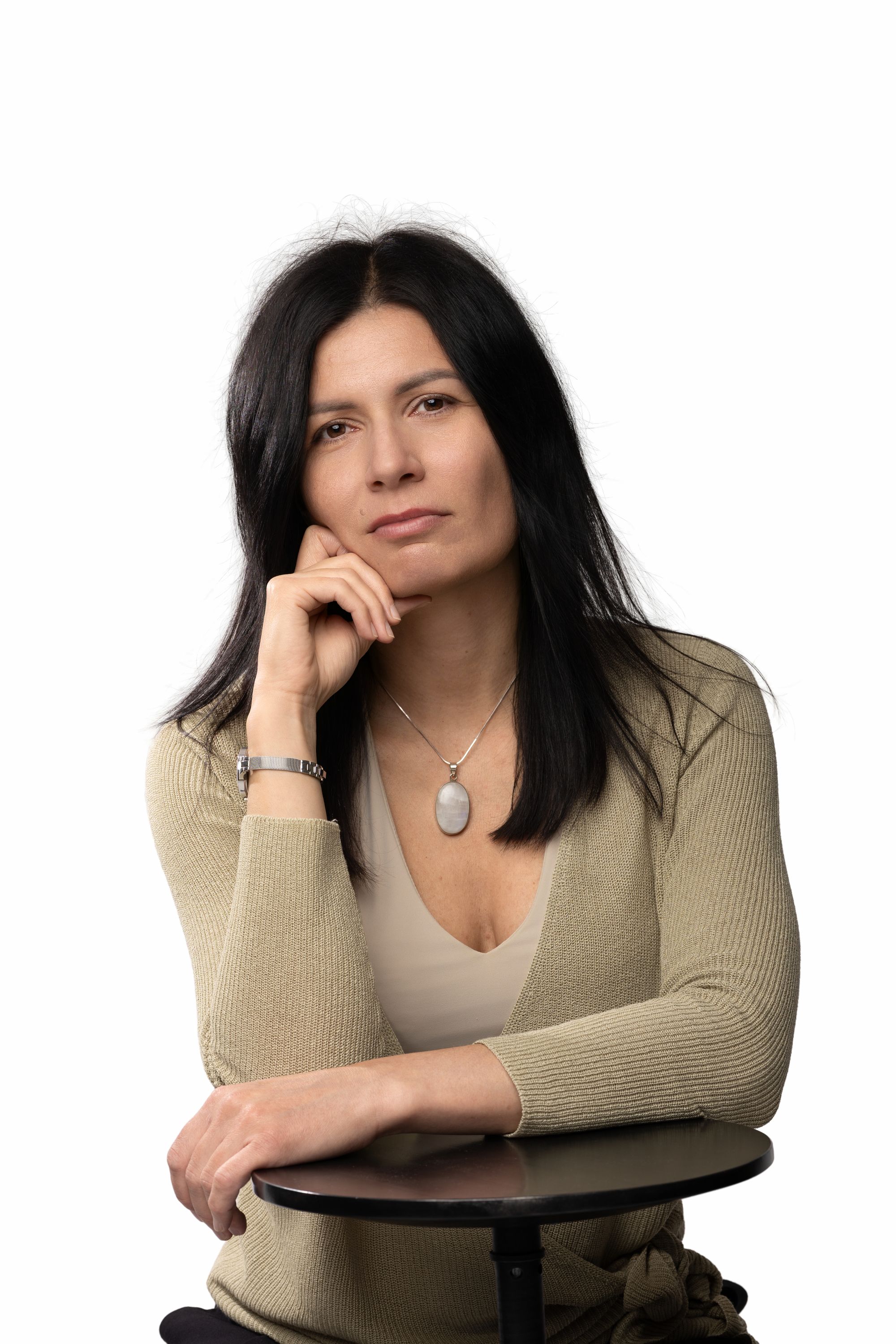
Aga Skraburska, author and facilitator of the program

Founder and President of the Foundation's Board. For over twenty years she has worked with organisations on people development, as a coach and trainer.

Workshop program

Eight sessions, one cycle.

01

Where your stress actually comes from

When tension runs high, everything looks equally urgent. This session has one goal: finding out where your stress really lives. Very often, what wears us down most isn't what we talk about most. So we start by understanding, not solving, and you choose one area to focus on for the whole cycle.

02

What the body is telling you

The body usually knows first. Tight shoulders, a clenched jaw, shallow breathing. We often miss these signals for years because we're too busy. In this session you learn to recognise your own signals and pick up a few simple exercises that help ease stress in the middle of a busy day, not just in a calm setting.

03

Sleep and energy

Trouble falling asleep, waking up at night, tiredness despite enough hours in bed, an afternoon energy crash. We talk about what genuinely supports rest: daily rhythm, light, winding down in the evening, breaks that actually recharge you. No miracle methods — ordinary things, done consistently.

04

When your head won't slow down

Thoughts keep coming back in the evening and on weekends. That's not a willpower problem, it's an overload problem. In this session we practise the one skill that makes the biggest difference and is also the hardest: subtracting. Telling the important apart from the merely loud. For many people, this is the most uncomfortable session in the whole cycle.

05

Life on autopilot

Days start to blur together, and you're carrying out a plan you never consciously chose. We pause and look at where your time and energy actually go — not to overturn everything, but to put you back in charge of the decisions.

06

Boundaries and hard conversations

Many of us say "yes" while thinking "no," or react too aggressively, and carry the resulting tiredness and resentment around with us. In this session we work on specifics: how to say no without over-explaining, how to start a conversation you've been putting off for months, and how to stay out of other people's tension. We practise on your real situations, not textbook examples.

07

Understanding your own reactions

Sometimes we react more strongly than we'd like, or pull back exactly where it matters most to us. It's worth seeing what's underneath that — not to look for someone to blame in the past, and not to become a prisoner of your own history, but to have a real choice today. We go as deep as you want to, and not a step further.

08

Your plan and your group

Knowledge alone doesn't change much. You put together a simple everyday plan — a few steps you'll actually follow through on. We're also honest about something visible in every group: change tends to fade when you're on your own, and holds far better when you're surrounded by people moving in the same direction. That's not a guarantee. It's the best thing we know.

The workshops and coaching are educational and developmental in nature and are not a substitute for medical consultation or therapy. If something is happening with your body and it worries you, the first step is to see a doctor.

Create space for less stress.

Choose how you want to start →

Questions? info@conscioushuman.pl