← All programs Building skills for the AI era

Unreplaced

A 2026 World Economic Forum report shows that AI isn't so much eliminating jobs en masse as changing how we work. Already 37% of young workers are in roles exposed to significant task change, and 28% believe that within three years, at least half of their current skills will lose relevance.

The first effects are already visible: in 2025, job postings for juniors fell 7%, while postings for experienced professionals rose 4%. At the same time, the more AI can do, the more valuable human judgment becomes — judgment that's built through self-awareness and experience.

That's why this program doesn't focus on AI tools, which change quickly. It focuses on what stays: how you think, how you decide, how you read a situation, and how you work with people. We don't know which jobs will "survive," but people who understand themselves and their strengths will lead the change.
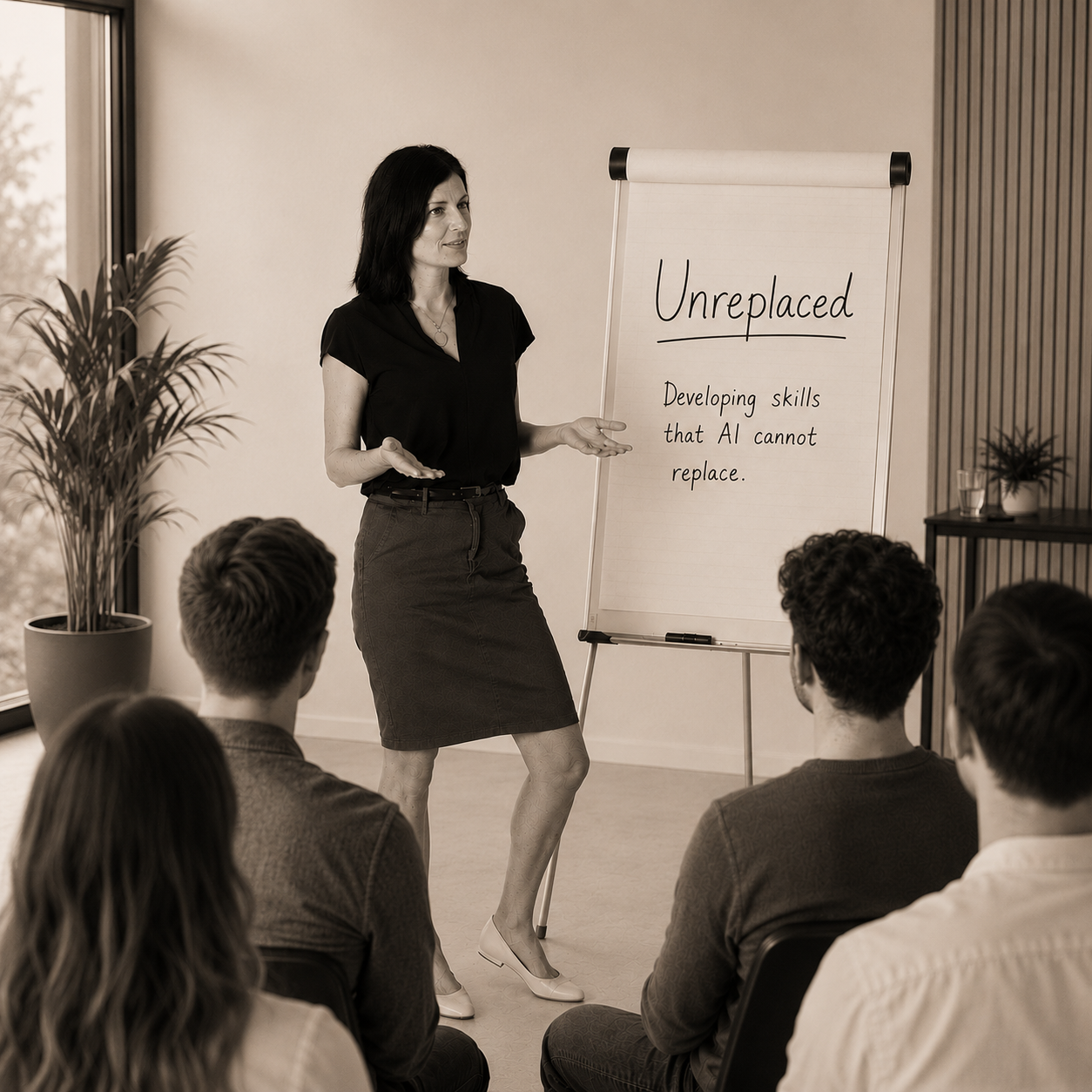
A facilitator leading an Unreplaced session at a flip chart reading “Developing skills that AI cannot replace”
  • an 8-session cycle
  • group of up to 12 people
  • sessions every two weeks
  • each session lasts 1.5 hours
Who it's for

For people who feel uneasy about AI-driven change and would rather deal with it than pretend it isn't happening.

"People often ask me: will AI take my job? The real question is: what do I bring that can't just be generated by AI? Most of us never had to ask ourselves that question, because doing our job well used to be enough. That era is ending."

Aga Skraburska

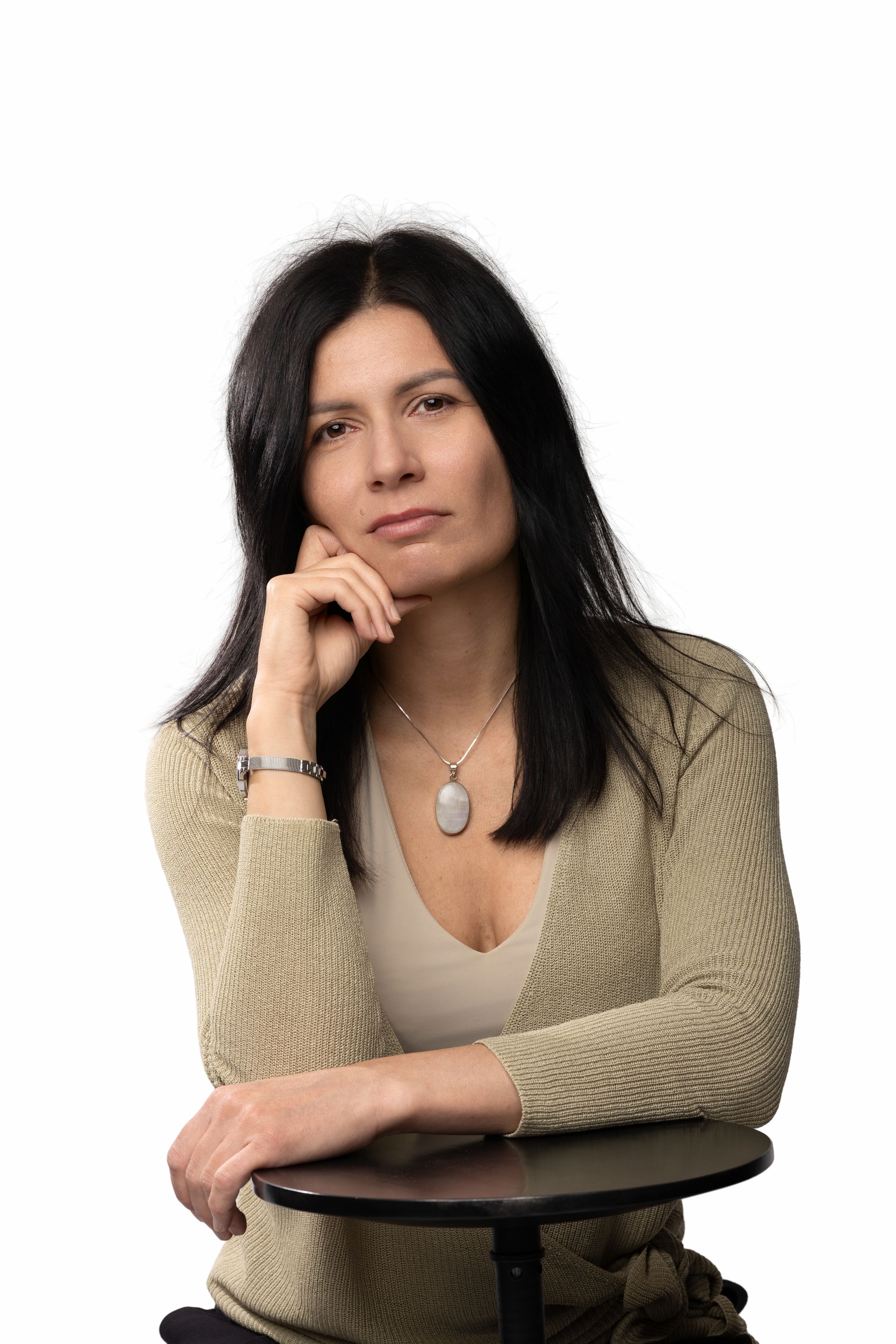
— Aga Skraburska, Founder and Board President of The Conscious Human Foundation

Session plan

Eight sessions, one cycle.

01

What's actually changing

We start by getting the facts straight: what AI does well today, what it doesn't, and where its responsibility ends. Then it gets personal — you look at your own work and separate what's a task from what's you. For many people, this is the first moment unease turns into something concrete.

02

Critical thinking

When answers come instantly and sound confident, the biggest risk isn't the machine getting it wrong — it's that we stop checking. In this session we practise asking better questions, spotting our own assumptions, and making decisions when the information is incomplete, which is the rule, not the exception.

03

Creativity

Creativity isn't artistic talent. It's the ability to connect things that don't seem to belong together, and to notice a problem before anyone's put it into words. AI models are great at generating variations on what already exists. They're much weaker at asking whether we're even working on the right problem. That's what we practise here.

04

Adaptability

Change rarely hurts on its own. What hurts is losing predictability and the sense of being good at something — after years of competence, you're a beginner again. This session is about getting through that period without faking enthusiasm or gritting your teeth. About learning faster, and making peace with a stretch of genuine discomfort.

05

Mental resilience

It's hard to think clearly with constant background worry about the future. We talk about what actually builds stability: what's within your control and what isn't, how to tell worry apart from information, and where to draw your sense of worth from when work stops providing it. No forced reassurance.

06

Communication and empathy

The more gets automated, the more depends on conversation — on whether you can persuade someone, listen carefully, or say a hard thing in a way the other person can actually hear. It's the oldest skill we have, and right now it's also the most underrated. We practise it on situations from your own work.

07

Initiative and ownership

This isn't about starting a company. It's about a mindset: noticing a problem and dealing with it before anyone tells you to. In a world where simply following instructions loses value the fastest, that's one of the few things that genuinely strengthens your position. We work on what's been holding you back from it.

08

Your plan and your group

At the end, you put it all into a simple plan: what you're learning, what you're changing about how you work, and how you'll know it's heading the right way. We're also honest that resolutions like this usually fade within two weeks if no one else knows about them — which is why we finish as a group, not alone.

These workshops are educational and developmental in nature. We do not provide professional or legal advice.

Find out what you bring.

Write to us and ask about the next Unreplaced cycle.

Ask about the next round →